

An AI-assisted finance operations platform that takes vendor bills from inbox to paid, with every number checked by code.
What it is
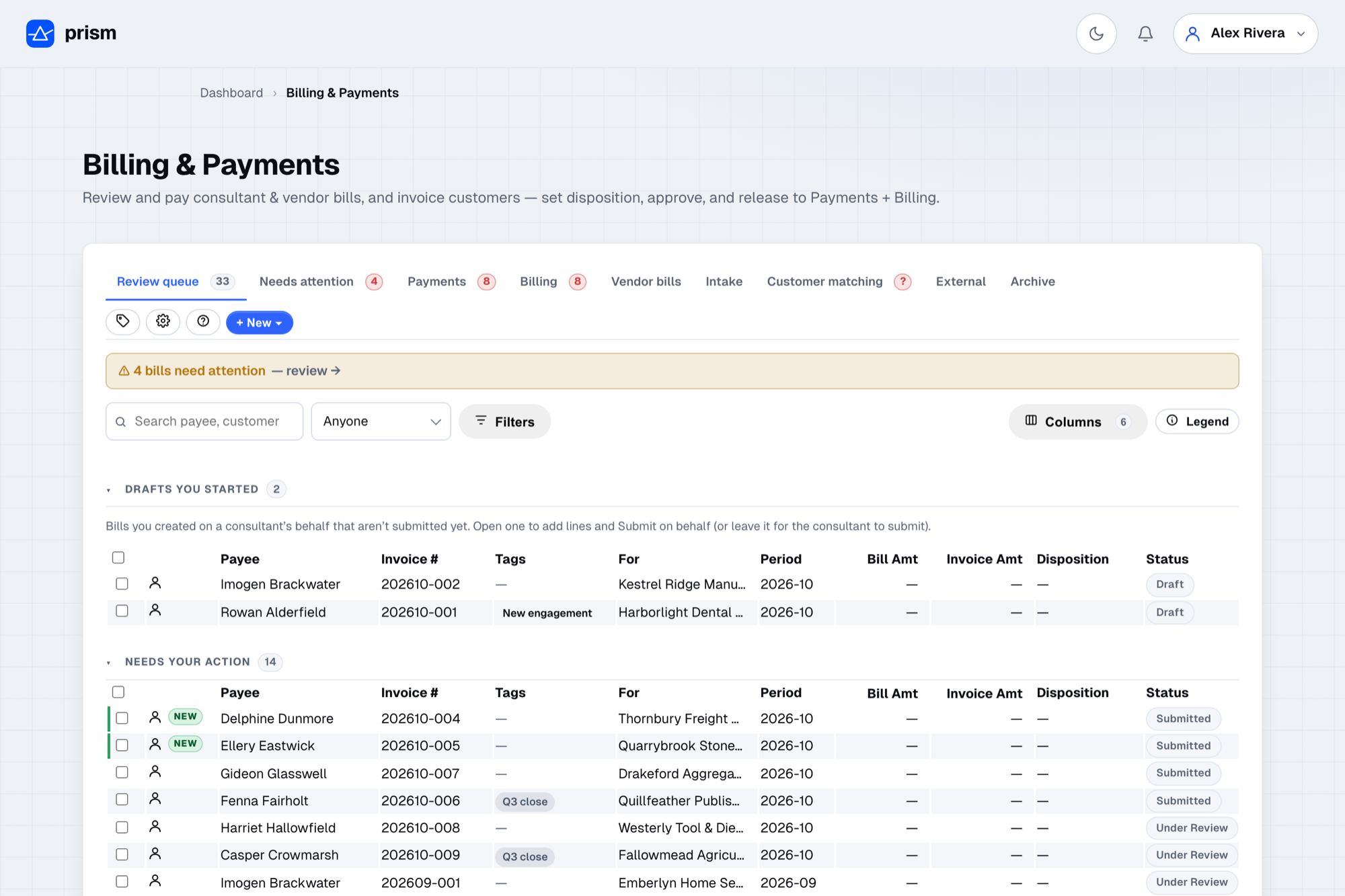
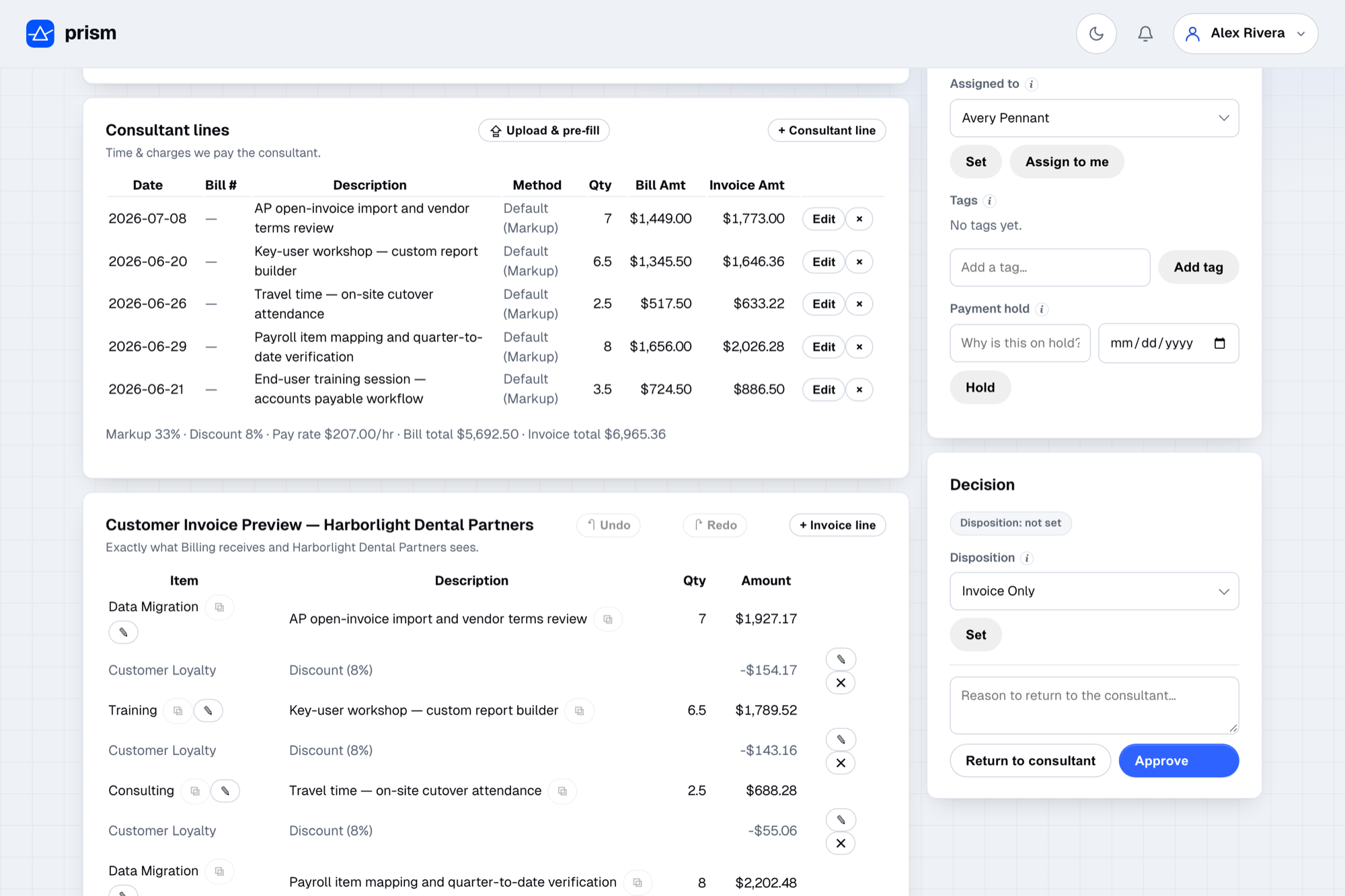
Prism is a finance operations platform in daily production use. Vendor and contractor invoices arrive by email, upload, or a self-service portal. AI reads each document and stages a draft bill; deterministic code checks the math to the cent, catches duplicates and lookalike vendors, and routes everything through one review queue. A single approval drives both sides of the transaction: paying the vendor and billing the customer. Around that core sit receivables, a cash-coverage forecast, and a complete audit trail. A multi-customer edition for professional-services firms is now in development.
Why it exists
Paying contractors and vendors, then rebilling that work to customers, means invoices in every format from many senders, each of which has to reach the right payee and the right customer. Done by hand it is slow, and the mistakes are expensive. Prism automates the reading and the bookkeeping while keeping people in charge of every decision that moves money.
Who it's for
Finance and operations teams that pay contractors and vendors and rebill that work to their own customers.
Standout features
Hands-free email intake
Staff drag an invoice email into a folder. Prism picks it up, skips auto-replies and noise, reads the bill, and creates a draft. Each message is processed exactly once, and one bad email never stalls the batch.
AI transcribes, code computes
The model copies every line exactly as printed, with where it found it and how confident it is. Code then recomputes each amount in whole cents and cross-checks it against the printed totals. A mismatch is flagged, never trusted.
Who actually gets paid
On reseller quotes and forwarded emails, Prism works out the real vendor from line items, branding, and remittance details. When two confident signals disagree, a person decides instead of the model.
Payment instructions, including hidden links
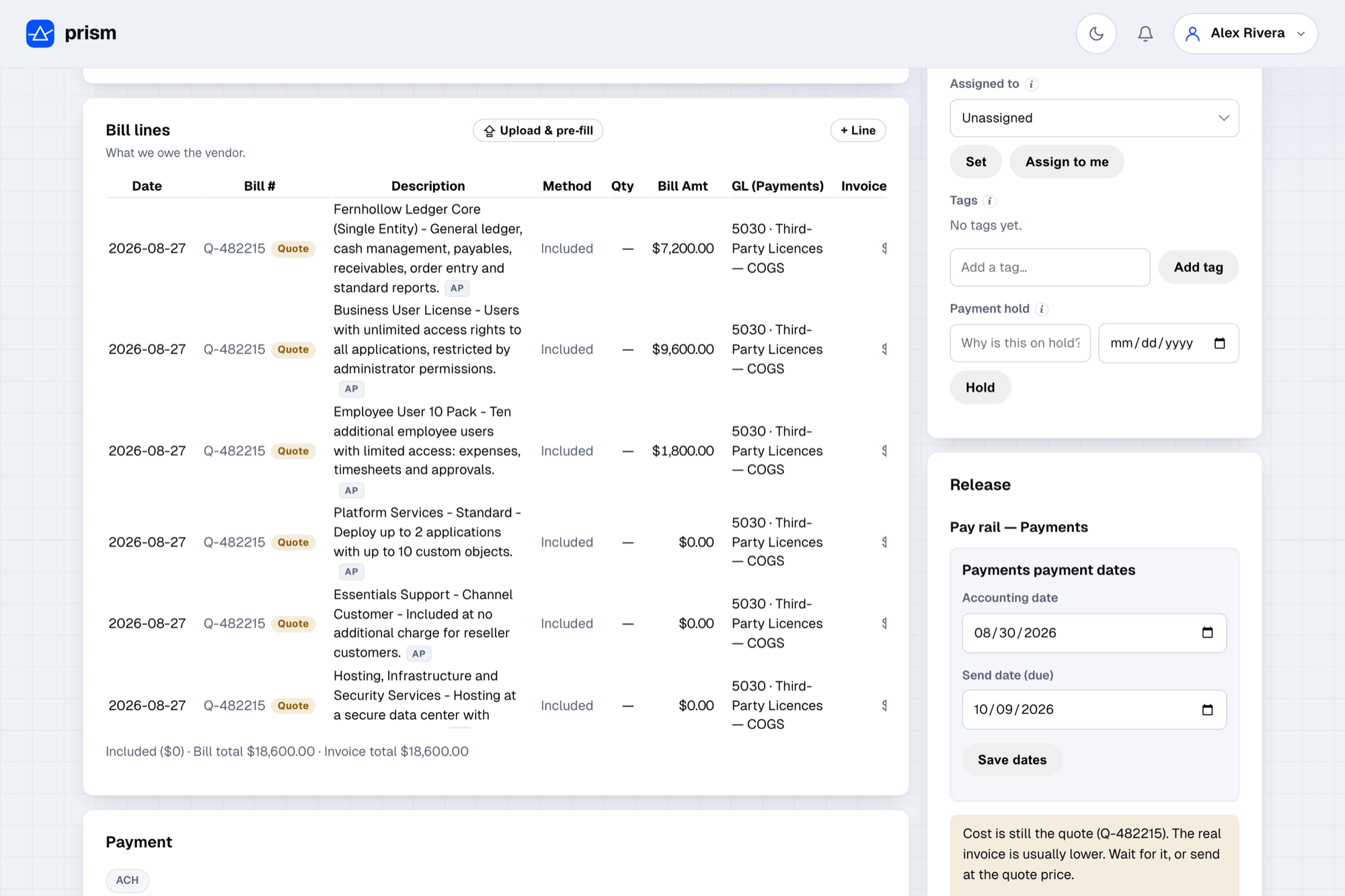
A second pass reads bank, check, and pay-online instructions. Links hidden behind PDF buttons are surfaced as candidates, and only secure links survive. The model is told never to invent account numbers.
Re-uploads that can't quietly change a payment
Each line is matched by identity first, then compared for content. Exact repeats are skipped; anything that changed goes to a person to replace, add, or skip.
Quote-to-invoice swap
When the final invoice replaces an earlier quote, Prism pairs the lines and shows what stayed, what was dropped or discounted, and the effect on margin. The swap is undoable.
Scope-aware line checks
Every line is classified against the signed proposal as included, excluded, or an add-on, and each verdict must cite a clause. No citation means the line is marked uncertain for review.
One approval, two rails
Paying the vendor and invoicing the customer are tracked separately, so nothing approved is ever left unsent. Approvals are atomic: if two people act on the same bill at once, only one action lands.
Cash-coverage forecast
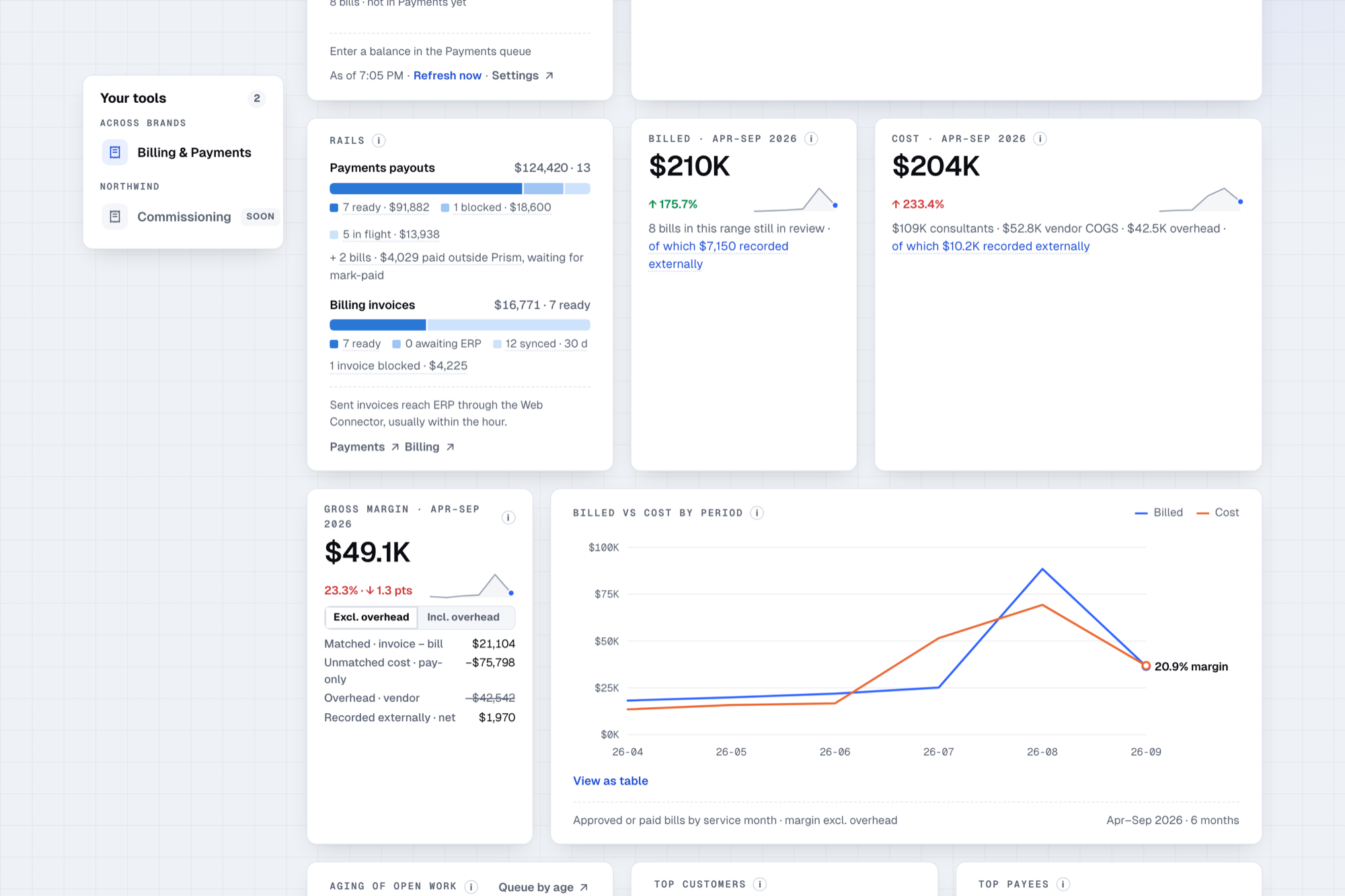
Before payments go out, Prism walks scheduled pay dates against the available balance and marks each one Covered, Tight, or Short. It never shows green on stale data, and it warns rather than blocks.
Receivables at a glance
Aging, top open balances, and payments received, kept current by signed webhooks plus a scheduled sweep that reconciles anything the webhooks miss.
Audit everything
The audit log is append-only, enforced by the database itself, and the build fails if any route that changes data isn't audited.
AI does the reading; code does the math and people make the decisions. Every model call is a structured, schema-checked request, and nothing ever pays automatically.
Anthropic Claude, schema-forced tool calls
Invoice extraction
Claude reads PDFs natively (spreadsheets are parsed by code first) and returns every line, reference, date, and printed total exactly as printed, with per-line provenance and a confidence score.
Payment-instruction reading
A separate extractor pulls remittance details and pay-online links, choosing only among links the code already found in the document.
Vendor inference
The model supplies the evidence for who issued a document; code applies the precedence rules and sends any conflict to a person, which doubles as protection against lookalike-vendor fraud.
Scope classification
Lines are judged against a scope profile the AI first extracted from the proposal. A verdict without a cited clause is forced to uncertain, and the classifier never touches money.
Cost guardrails
A hard daily spend ceiling sits in front of every call, each call is metered per user and reconciled against the provider's actual billing, and re-uploading the same file reuses the stored reading instead of paying for a second one.
How it works
Build activity
Active this weekLast update Oct 6, 2026 · 238 changes in the last 90 days · current release v0.144.2 · 125 releases in 90 days
Updated automatically from the project's build history. Last refreshed Oct 12, 2026.
What made it interesting to build
The guiding rule became "AI transcribes, code computes": the model never adds or totals anything, it only copies what is printed, and money lives in whole cents. Two bugs shaped the design. Re-uploads used to be able to overwrite a line silently, so Prism now decides "is this the same line?" separately from "did it change?" and turns every change into an explicit choice. And the cash forecast once double-counted payments, because the bank's available balance drops the moment a payment starts while the bill still reads as processing; Prism now recognizes a payment in flight when the balance fell by exactly that amount, to the cent.