



What it is
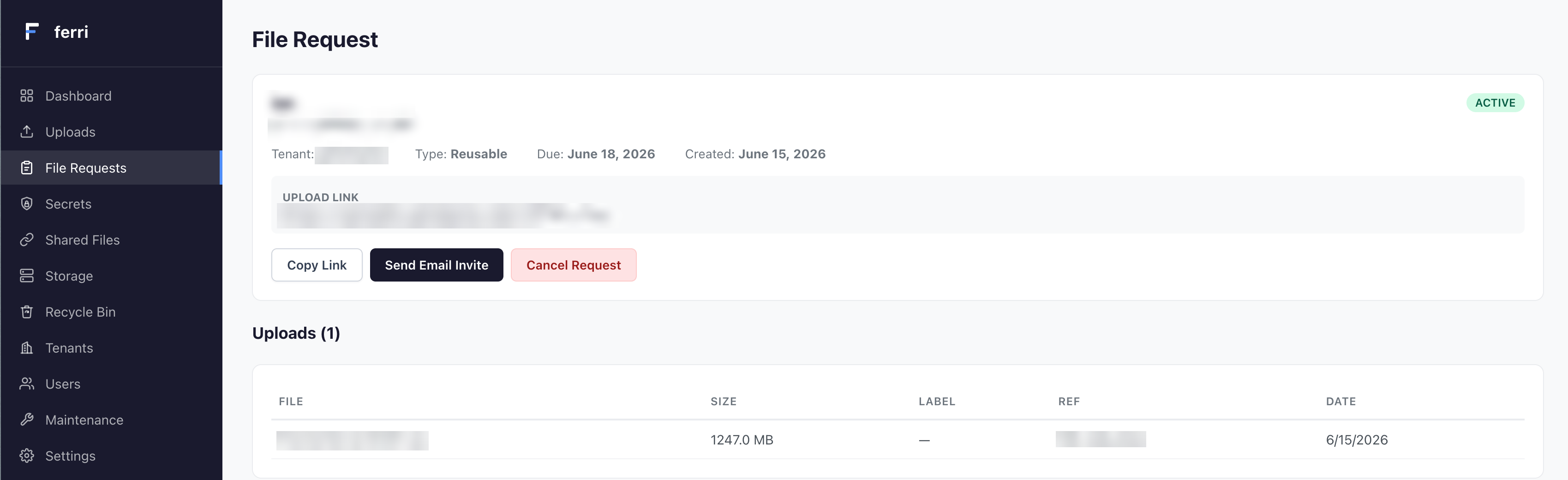
Ferri is a branded document-collection platform. A business sends a customer an upload link that carries its own logo and colors; the customer drops in their files; the files travel straight from the browser to secure cloud storage. Each tenant gets its own branded portal on its own domain.
Why it exists
Collecting documents from customers — tax files, insurance paperwork, service records — usually means clunky email attachments or a portal built from scratch for every brand. Ferri turns that into a reusable, secure, on-brand experience that any company can stand up quickly.
Who it's for
Accounting firms, brokers, service businesses, and IT consultancies that collect files from their own customers.
Standout features
Huge uploads that survive bad networks
Files tens of gigabytes in size go up in chunks that retry with backoff, restart if they stall, and slow down when errors pile up. If parts still fail, Ferri asks which are missing and re-sends only those.
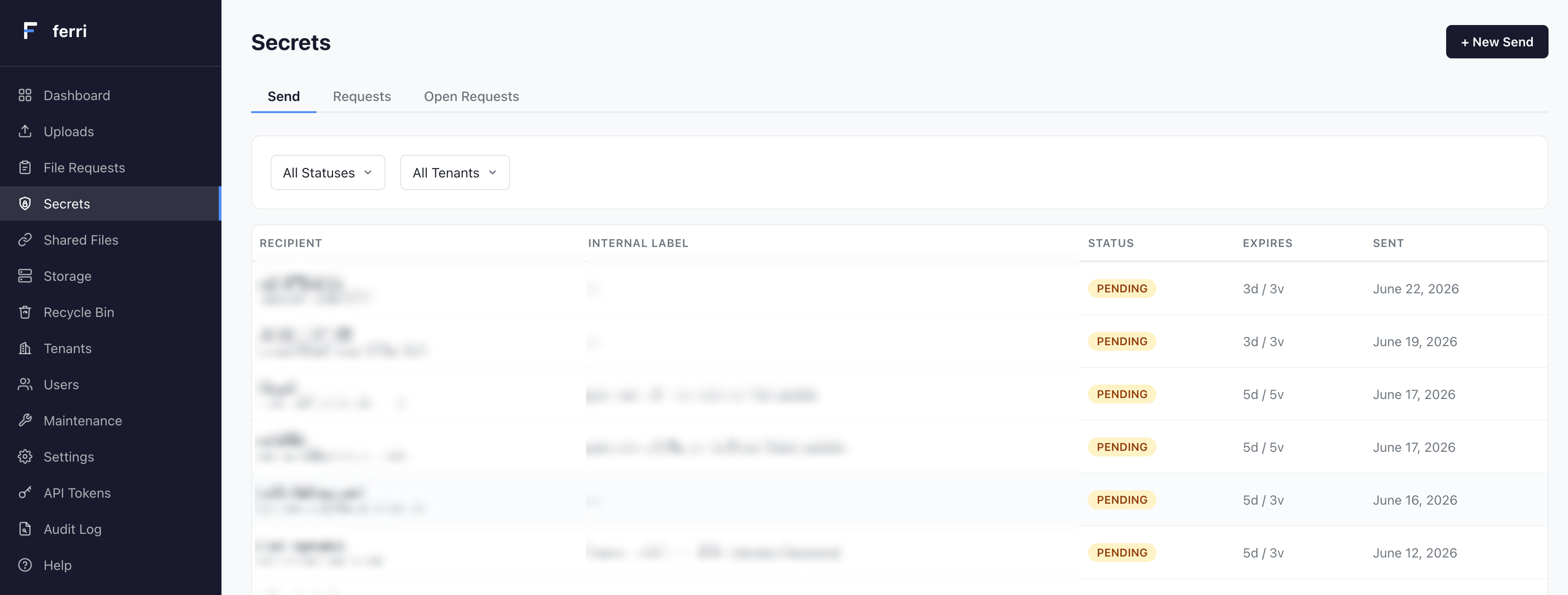
Secret Sends with open tracking
Share passwords or notes as self-destructing links with view and day limits, and see exactly how many views have been used and when.
One send, many recipients
A file or secret fans out as separate links per person, each with its own passphrase, view limit, and expiry, so one recipient's actions never affect another's.
Ask for secrets safely
Request a password or sensitive note from a client through a view-once link, so it never sits in plain text in an inbox.
Two-channel access codes
The link arrives first and the access code follows separately, and a lost code can be re-issued without using up the secret's remaining views.
Expiry that cleans up after itself
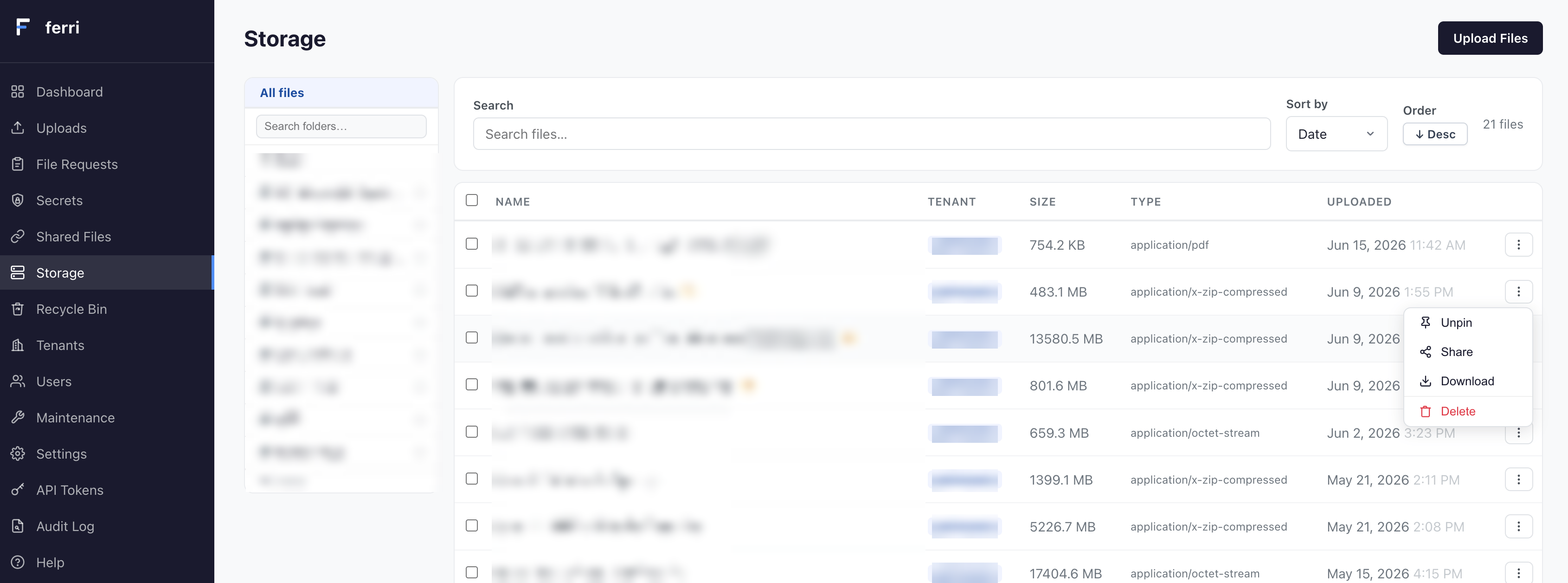
Per-file auto-delete dates, a recycle bin with heads-up and last-chance emails, and pinned files that are never removed.
Scoped, revocable API
Tenant-bound tokens with limited permissions, stored only as hashes and revoked automatically when their creator leaves.
Ferri doesn't use AI at runtime. It is a security product, and every behavior is deterministic and auditable. AI coding agents did help build it, working under written engineering directives.
How it works
Build activity
Active this monthLast update Oct 2, 2026 · 3 changes in the last 90 days · current release v0.25.0 · 3 releases in 90 days
Updated automatically from the project's build history. Last refreshed Oct 12, 2026.
What made it interesting to build
Keeping the core file flow fast while layering on security was the constant tension. Direct-to-storage uploads made transfers quick, but each new safeguard — one-time access codes, password-protected shares, role-based visibility, audit logging — risked complicating that clean path. An early bug where large files briefly appeared empty taught us to trust the storage layer's eventual state rather than the browser's first read.