


A configurable AI gateway that plugs language models into real business data.
Visit live site ↗

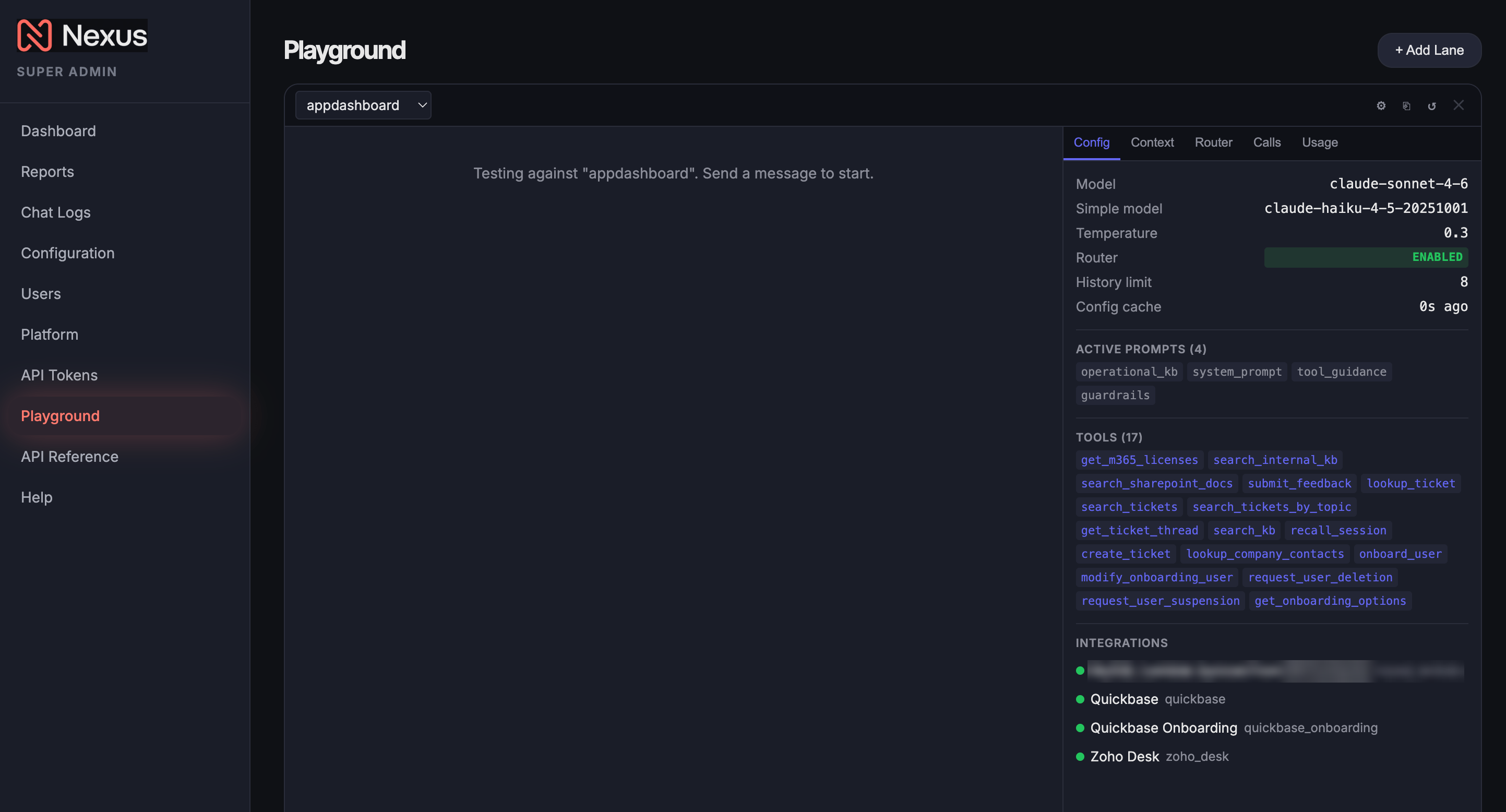
What it is
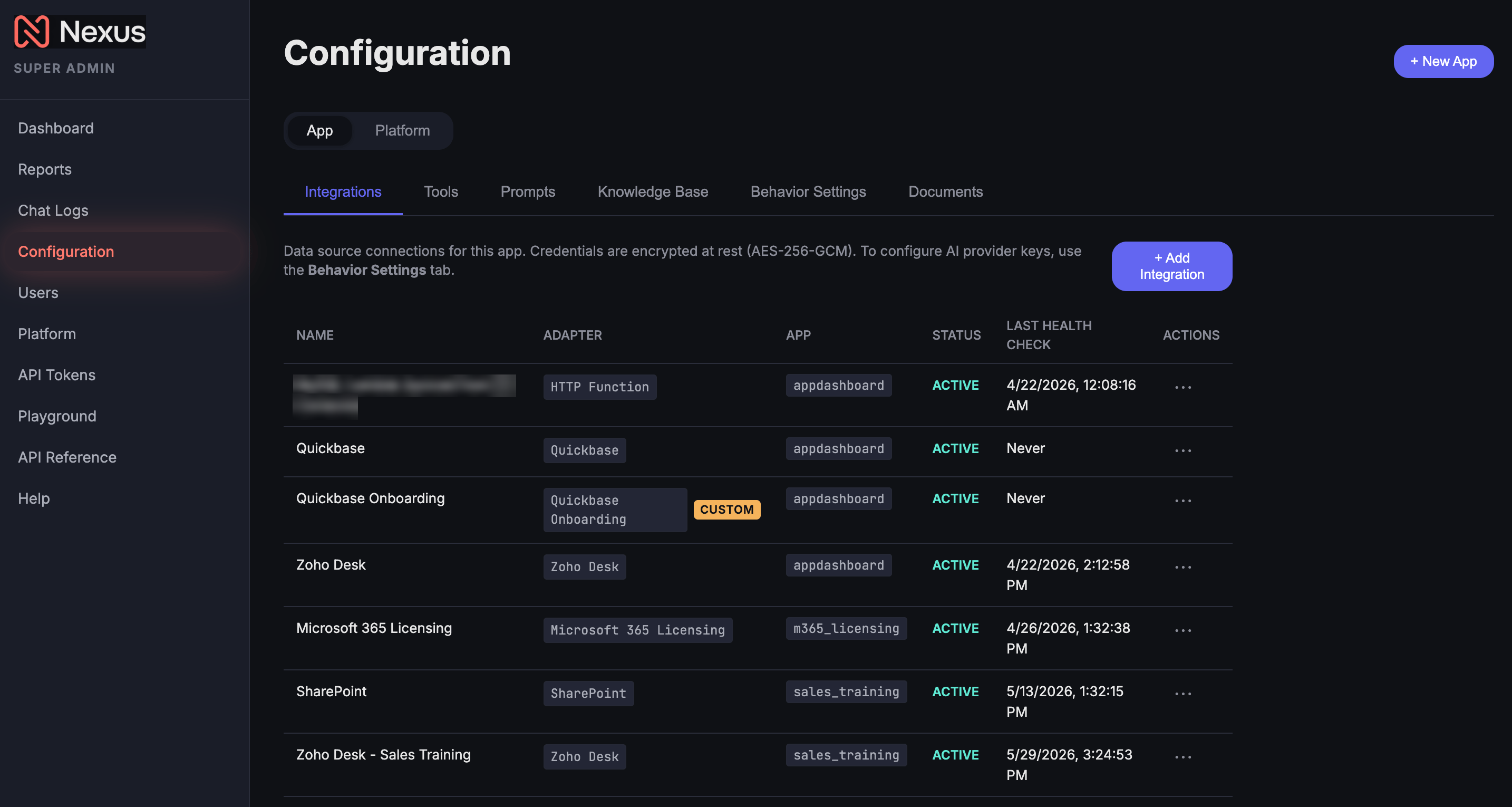
Nexus is the AI backbone that sits between business systems — support desks, document stores, databases — and the language models that reason over them. It handles the unglamorous-but-essential parts: keeping each customer's data walled off from every other, remembering conversations, assembling the right context on the fly, and routing each request to the right model.
Why it exists
Every product that wants an AI feature ends up rebuilding the same plumbing: authentication, tenant isolation, data connectors, conversation memory. Nexus centralizes that layer once so new apps can ship AI features in days instead of months — without reinventing the foundations each time.
Who it's for
Internal products that need an AI brain, plus teams that want to embed configurable AI agents without building infrastructure from scratch.
Standout features
Cost tracks difficulty, not traffic
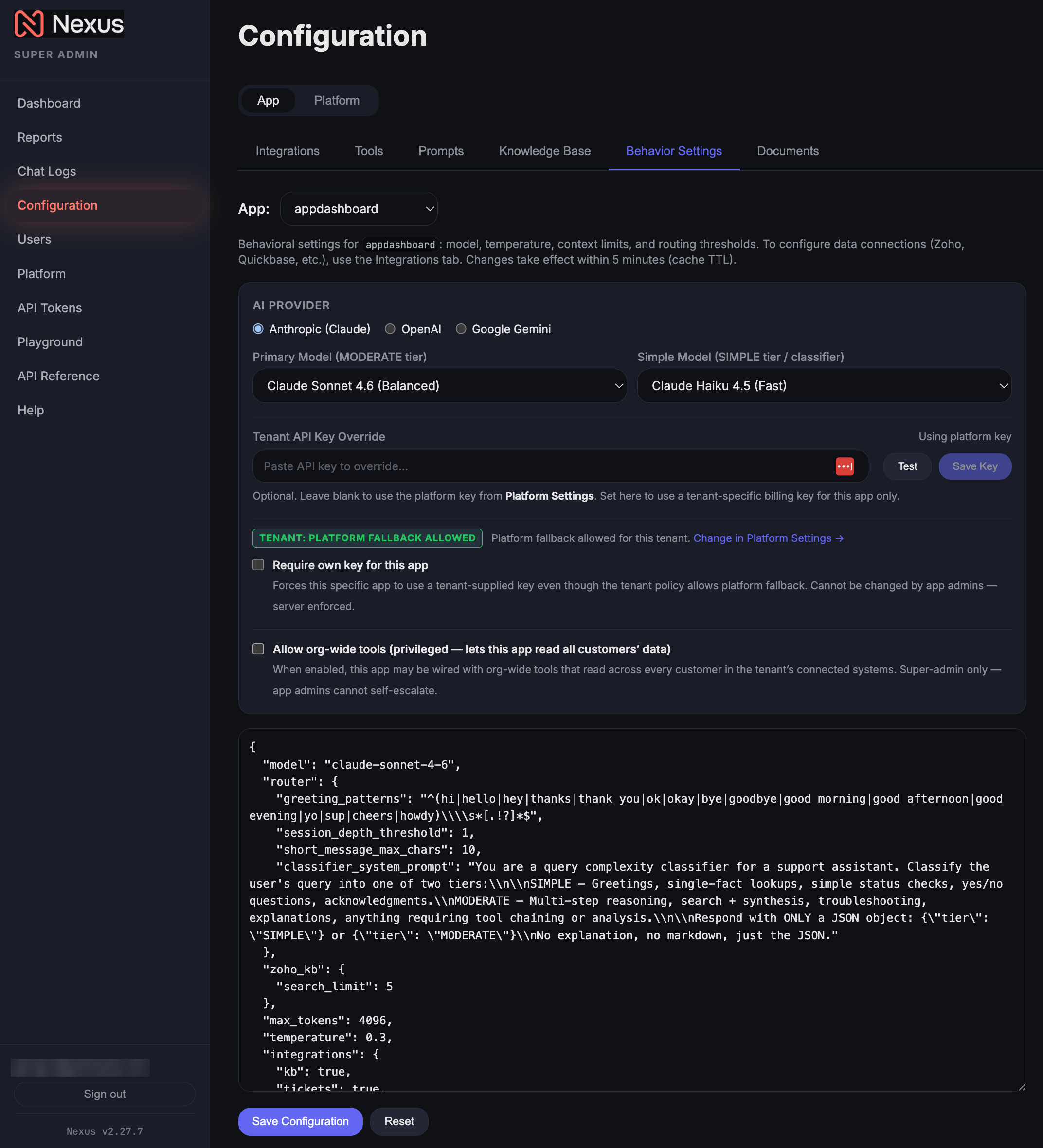
A free first-pass check plus a small classifier model send simple turns to a fast, inexpensive model and multi-step reasoning to a stronger one.
An agent that uses live tools
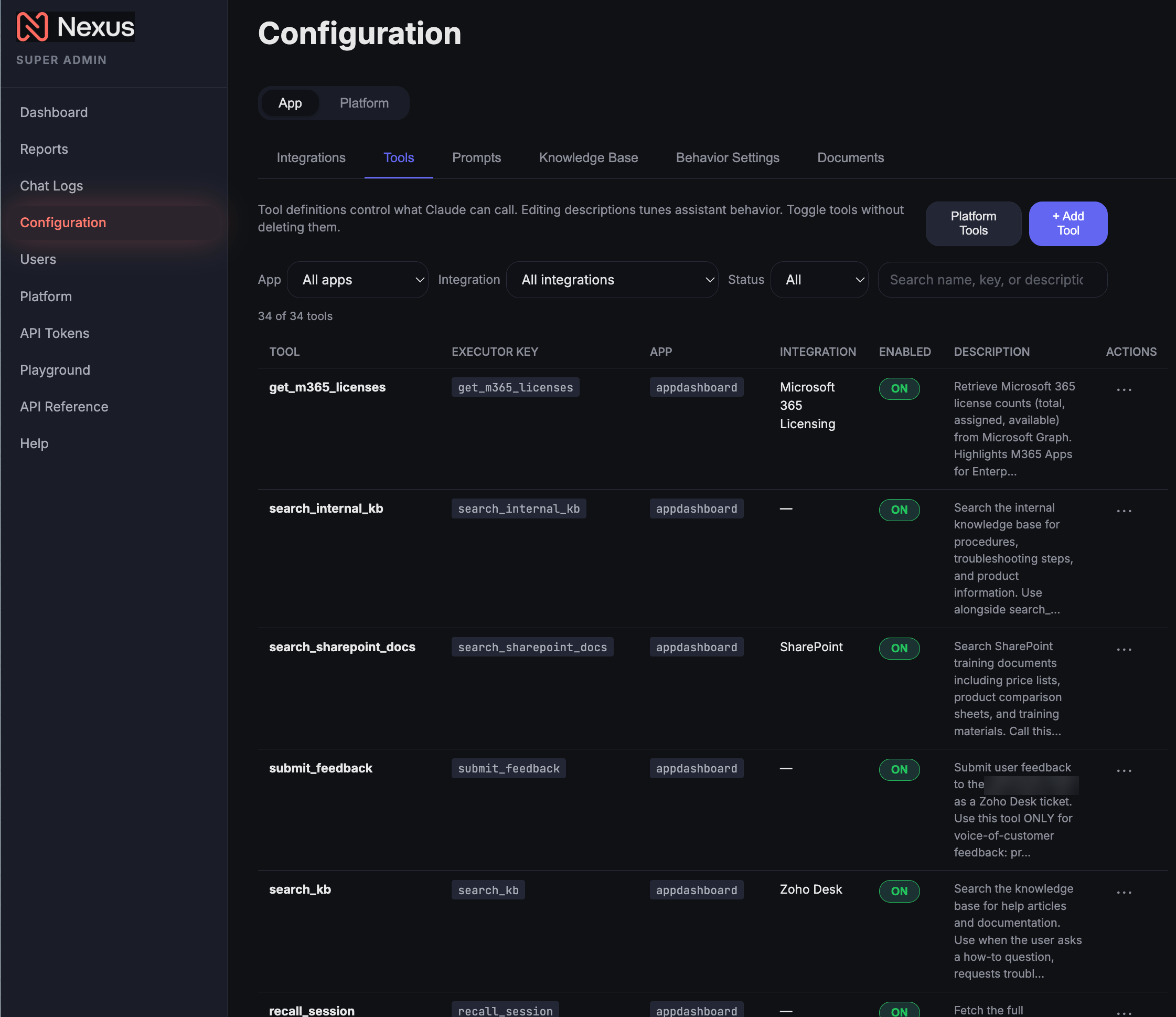
The model looks up records, searches knowledge, creates entries, and reads the web, running tool calls in parallel for several rounds, always inside the asking user's permissions.
Memory across conversations
Rolling summaries carry what matters from one chat to the next, and the agent can pull up the full history of an earlier conversation when it needs it.
Search that forgives vague wording
Meaning-based vector search blended with keyword ranking, with fallbacks for loose phrasing and typos, so the right article turns up anyway.
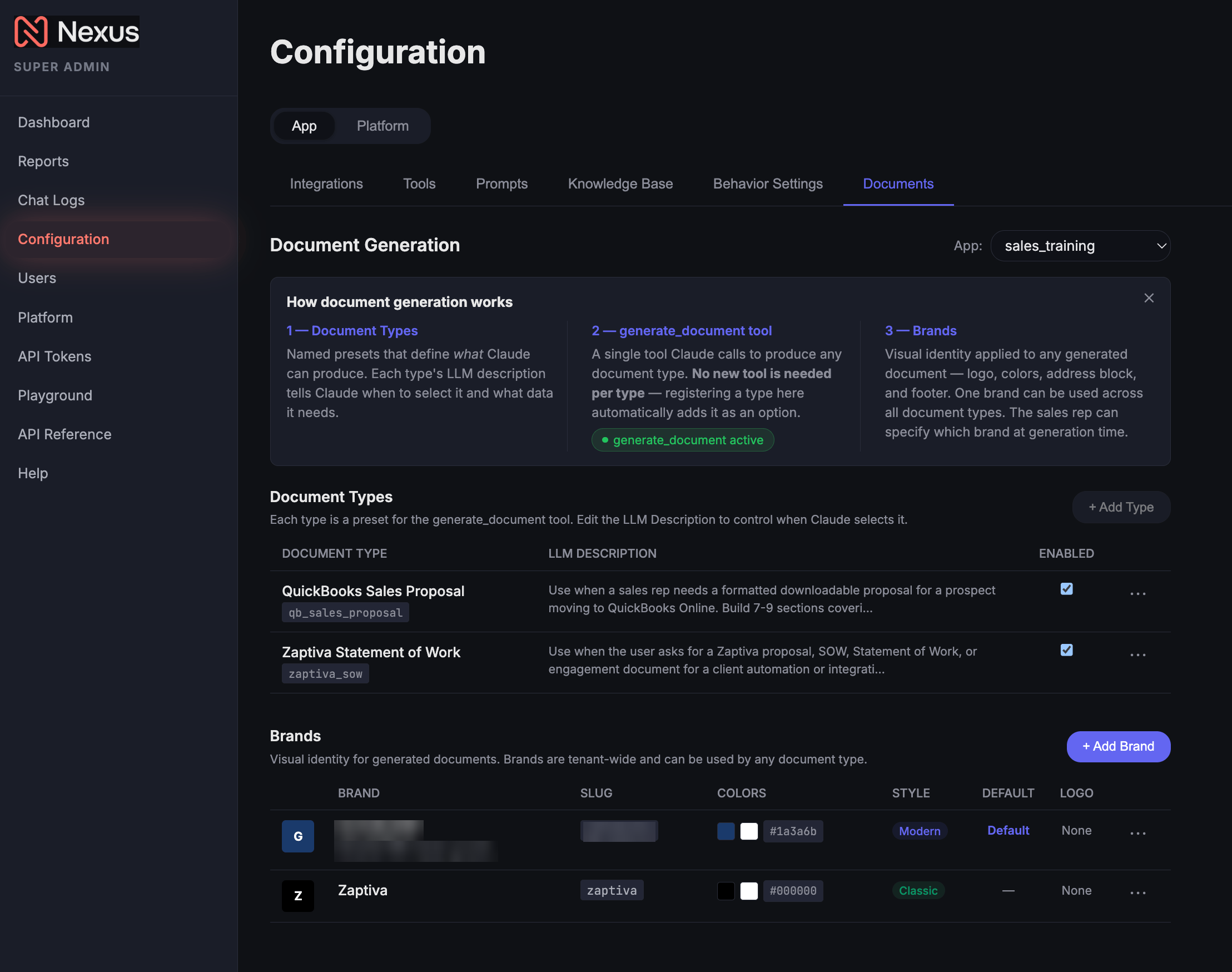
Drop in documents, get a knowledge base
Spreadsheets, PDFs, and Word files are rewritten by AI into clean, tagged articles with numbers kept exactly, then indexed for search.
Knows what is current
Articles carry effective dates and a current or superseded status. Old versions drop out of answers by default, and every answer cites its source and date.
Teach the AI in plain English
An admin flags a bad answer and says what was wrong. The AI diagnoses whether the prompt, the data, the model, or a missing article caused it, and proposes a small, reversible fix that applies in one click.
Lives where people work
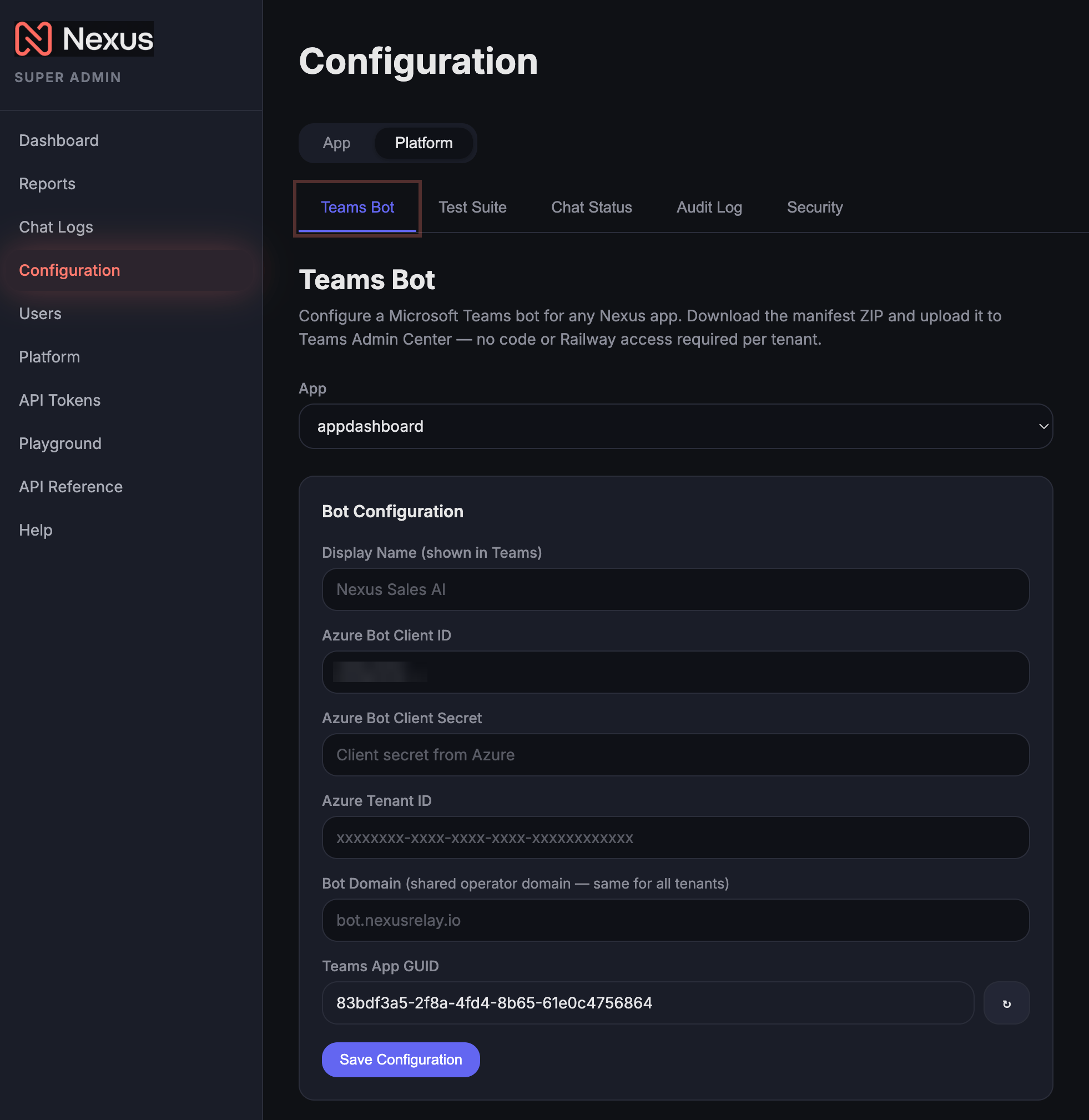
A web widget, a portal, and a Microsoft Teams bot that serves many organizations from one deployment.
Deep research mode
On request, Nexus steps up to its strongest model, widens its budget, and reads public websites through a hardened fetcher, capped per user per day.
Tested before it ships
Scripted conversations check which tools were called and what an answer must or must not say, and deployments are gated on the result.
Nexus is AI end to end: routing, reasoning, memory, retrieval, and even fixing its own prompts. The point is to make that capability safe, permissioned, and affordable.
Provider-pluggable: Anthropic Claude by default, with OpenAI and Google Gemini adapters
Two-stage model routing
A no-cost heuristic handles the obvious cases, then a small model classifies the rest by difficulty. If the classifier fails, the request falls back to a safe middle tier.
Agent loop
Each turn streams live. When the model asks for tools, every call runs in parallel and the results flow back in, for up to ten rounds, with authorization checked on every call.
Memory and summarization
A small model compresses older turns and older sessions into summaries, so long conversations stay coherent without resending everything.
Retrieval
Vector embeddings plus full-text and fuzzy matching, with retrieved content clearly marked as untrusted data to blunt prompt injection.
Self-improving prompts
The correction feature uses structured output to return a minimal change to the prompt, which is saved as a new, reversible version.
Cost engineering
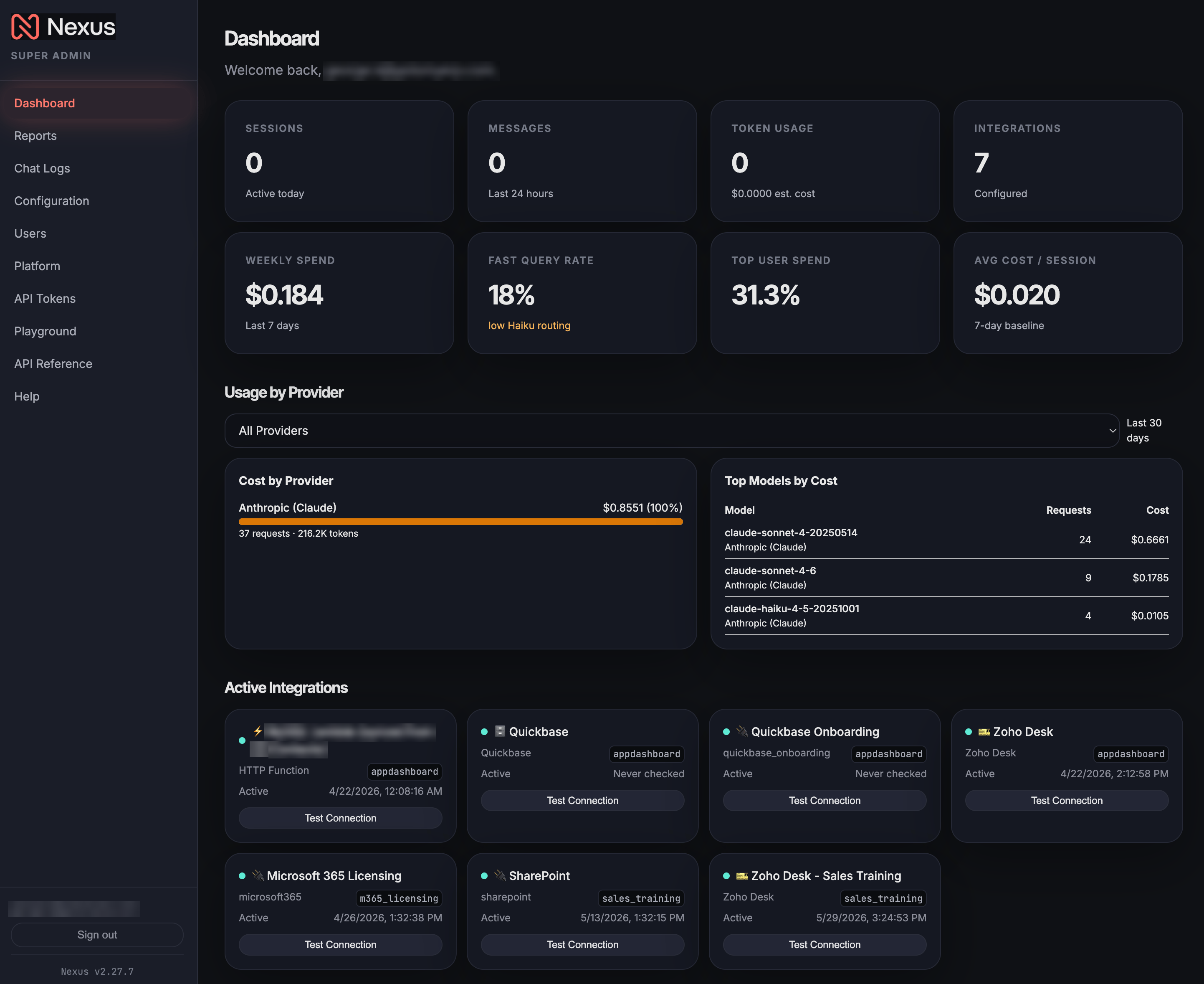
Prompts are split into a cached static half and a dynamic half, history is trimmed to a short window, output is kept concise, and spend is reported per app and per feature.
How it works
Build activity
Active this monthLast update Oct 1, 2026 · 40 changes in the last 90 days · current release v2.47.0 · 7 releases in 90 days
Updated automatically from the project's build history. Last refreshed Oct 12, 2026.
What made it interesting to build
The biggest turning point was moving from hard-coded behavior to a fully configurable system. Early versions baked every tool and setting into the code, so each new integration meant a fresh deploy. We rebuilt the core so behavior lives in configuration that admins can change without shipping code — a far bigger refactor than it sounds, because it touched how prompts, tools, and integrations were defined everywhere. Along the way we also learned to surface silent failures loudly: a retired model ID once broke chats quietly until we wired streaming errors into real logging.